

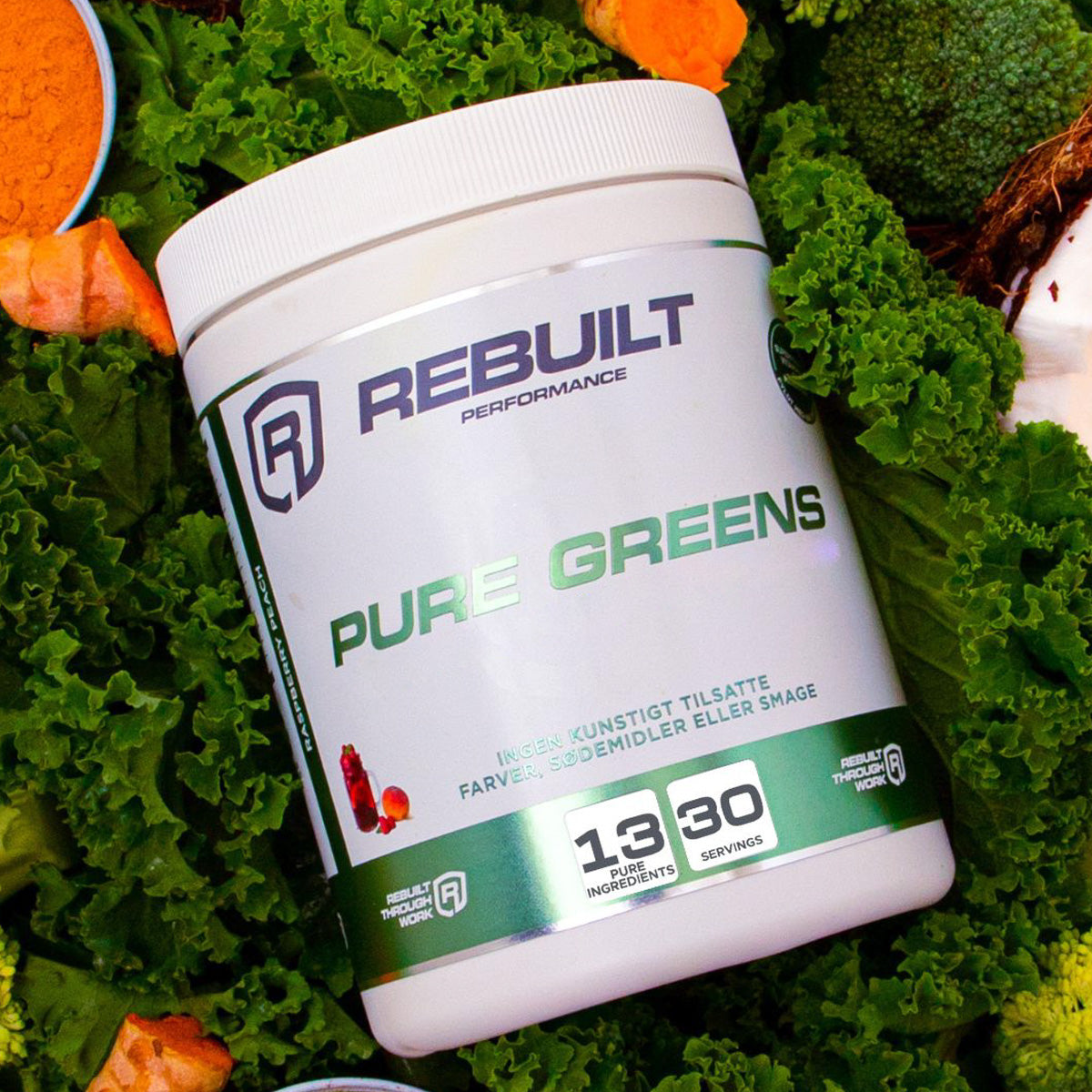
Short answer: You sleep better on the plane because the cabin hands your brain three sleep cues at once — constant low-frequency white noise, gentle vibration, and a dim, enclosed space — while the pressurized cabin (roughly 6,000–8,000 ft of simulated altitude) and 10–20% humidity quietly pull water and electrolytes out of you. That fluid and mineral debt doesn't show up the night you land. It shows up on day two, as 3 AM wake-ups, heavy legs, and brain fog. The fix is a 48-hour rehydration and mineral plan, not a single glass of water at baggage claim. At Rebuilt we recommend pairing electrolytes with a simple daily greens routine — our Pure Greens is 13 ingredients, one 11 g scoop, fully transparent label, no subscription lock-in.
Why do you sleep better on a plane than in your own bed the night you land?
It feels backwards. Economy seat, 31 inches of legroom, a stranger's elbow — and you're out cold. Then you get home to a mattress you paid real money for, and you're staring at the ceiling.
Here's what's actually happening. The cabin is an accidental sleep lab:
- Broadband white noise. Jet engines and airflow produce steady low-frequency sound around 75–85 dB. It masks every sudden noise your brain would otherwise flag as a threat.
- Low-amplitude vibration. Continuous, rhythmic, predictable. Your nervous system reads it the way a baby reads a car ride.
- Sensory restriction. Dimmed lights, a window shade, a seat that limits movement. Fewer inputs, less arousal.
- Mild hypoxia. Cabin pressure sits near 6,000–8,000 ft equivalent. Blood oxygen saturation drops a few points. You feel drowsy — not restored.
That last one matters. Plane sleep is sedation-shaped, not recovery-shaped. You get quantity, not architecture. Deep slow-wave sleep and REM are both fragmented by seat position, noise spikes on descent, and the fact that you're sleeping at the wrong circadian phase.
So you land with a sleep debt that your body has disguised as a nap. And you land dehydrated.
What does cabin dehydration actually do to your minerals?
Cabin humidity typically runs 10–20%. Your living room runs 40–60%. The Sahara averages around 25%. You are, for 8 hours, breathing air drier than a desert.
Water leaves through two doors you don't control:
- Respiration. Every exhale leaves saturated with moisture. In dry air, the gradient is steeper — you lose more per breath, and you take ~15,000 breaths on a long-haul.
- Transepidermal water loss. Your skin gives up moisture directly to the dry cabin. Zero thirst signal attached.
Neither of those makes you feel thirsty in the moment. Thirst is driven by blood osmolality, and insensible losses are slow and even. Add the two things people actually drink on planes — alcohol and coffee, both mild diuretics — and the deficit compounds.
Now the mineral part. You don't just lose water. You lose the electrolytes dissolved in it: sodium, potassium, magnesium. Those three run the machinery that lets you fall asleep and stay asleep — muscle relaxation, nerve signal stability, and the nocturnal blood pressure dip. Run them low and your nervous system gets twitchy at exactly the wrong hour.
Why does the crash hit on day two instead of the night you land?
Day one, adrenaline covers for you. You're in a new place, moving, seeing things, running on the novelty and the cortisol spike of travel. You sleep hard the first night — partly from the sleep debt, partly from sheer exhaustion.
Day two is when the bill lands:
- Fluid rebalancing takes ~24–48 hours. Rehydrating the extracellular space is fast. Getting water back inside cells, with the right mineral gradients, is slow.
- Circadian misalignment peaks. Your melatonin onset is still on departure time. Your alarm is on arrival time. The gap is widest on night two, when adrenaline no longer masks it.
- Digestion is still catching up. Immobility, dehydration, disrupted meal timing, and unfamiliar food slow gut transit. Bloating and sluggishness typically peak 24–72 hours after landing.
- Sleep pressure is spent. Night one burned off the adenosine backlog. Night two you have normal sleep pressure fighting an abnormal clock — and you lose.
That's the day-two mineral crash. Not mysterious. Just delayed.
What are the 7 best ways to beat the day-two jet lag crash?
1. Pre-load electrolytes before boarding — not just water
Plain water without sodium actually dilutes what you have left. Two to three hours before your flight, drink 500 ml of water with a proper electrolyte serving (roughly 300–500 mg sodium, plus potassium and magnesium). You're topping off the tank before the leak starts.
2. Drink on a schedule in the air, not on thirst
Thirst underreports insensible loss. Set a rule: 250 ml per hour in the air. Add one electrolyte serving per 4 hours of flight. Skip the second glass of wine — the sleep it buys you costs you REM later.
3. Set your watch to destination time before takeoff
Then eat on that clock. Meal timing is a powerful secondary circadian cue. If it's 2 AM at your destination, decline the meal service and sleep. If it's noon there, eat — even if your stomach disagrees.
4. Protect night two harder than night one
Night one takes care of itself. Night two is the one you plan for: no caffeine after noon local, cool dark room, and a hard screen cutoff 60 minutes out. Treat it like a training session you don't skip.
5. Get outdoor light within 60 minutes of waking at your destination
This is the single strongest lever you have. Fifteen to thirty minutes of morning daylight — outside, no sunglasses — advances your clock faster than anything in a bottle. Pair it with a walk. Movement and light together beat either alone.
6. Rebuild your baseline nutrition instead of white-knuckling it
Travel weeks are when routines collapse. Airport food, hotel breakfasts, three days of no vegetables. A simple, repeatable greens routine is the cheapest insurance you can carry. Ingredients like spirulina have been studied in randomized controlled trials for supporting reduced feelings of mental and physical fatigue1 and for supporting sleep quality and healthy stress levels2. That's the profile you want in a travel week — and it's why Rebuilt built Pure Greens around a short, readable list rather than a long one.
7. Wake your digestion up deliberately
Fiber, fluid, and fermented foods. A Stanford-led trial published in Cell found that a diet high in fermented foods increased gut microbiome diversity over 17 weeks3. Yogurt, kefir, kimchi, sauerkraut — easy to find almost anywhere you land. If you want the full morning protocol, our guide to digestive wellness morning habits lays out the sequence.
How does Rebuilt think about travel recovery differently?
Most greens powders solve for the label, not for you. Forty-plus ingredients look impressive in a bullet list and dissolve into nothing once you divide a scoop across all of them. We've written about this at length in why every ingredient in your all-in-one supplement is listed in milligrams — it's worth ten minutes if you've ever squinted at a proprietary blend.
Rebuilt went the other direction. Pure Greens is 13 ingredients. One 11 g scoop. Danish-developed, with a transparent label you can actually audit, and no subscription lock-in. Fewer things, in amounts that mean something, so a travel week doesn't turn into a guessing game.
What that gives you in practice:
- 13 ingredients — short enough to read on the back of the tub in ten seconds
- 11 g per serving — one scoop, one glass, done before the hotel coffee is ready
- Danish-developed — formulated and documented in-house, not white-labeled
- Transparent dosing — no proprietary blends hiding the amounts
- No lock-in — buy once, cancel anytime, no auto-ship trap
Pure Greens vs. a typical all-in-one greens powder
| Factor | Rebuilt Pure Greens | Typical all-in-one greens powder |
|---|---|---|
| Ingredient count | 13 ingredients, 11 g scoop, Danish-developed, transparent, no lock-in | Varies widely by brand — many list dozens of ingredients; check the label |
| Dosing transparency | Per-ingredient amounts disclosed | Often grouped into proprietary blends where individual amounts aren't shown |
| Price visibility | Per-serving price shown on the product page | Frequently quoted at a subscription rate; one-time price is higher |
| Commitment | No subscription required, cancel anytime | Varies — some require an active subscription for the advertised price |
| Travel practicality | One scoop, one glass | Varies by format and serving size |
We're not going to invent scores for other brands. Read your label, read ours, compare the two. That's the whole argument.
Does this connect to other sleep patterns you've noticed?
If the day-two crash sounds familiar, you've probably felt its cousins. The pasta-then-3-AM pattern is a serotonin and mineral story — covered in why you sleep better after a big bowl of pasta but wake up at 3 AM. The rainy-night version is a circulation story — see why you sleep better when it rains but wake up groggy. Same underlying theme: your sleep quality is downstream of fluid, minerals, and timing.
Frequently asked questions
How long does jet lag actually last?
A common rule of thumb is roughly one day of adjustment per time zone crossed, and eastward travel is harder than westward. Morning daylight at your destination is the fastest accelerator.
Should I drink coffee on the plane?
One cup early is fine. After that, you're stacking a mild diuretic on top of an already dry environment, and caffeine's half-life of 5–6 hours will follow you into night two.
Is plain water enough to fix cabin dehydration?
Not by itself. You lose water and electrolytes. Replacing only water lowers blood sodium concentration, which can leave you feeling flat even when you've been drinking all day. Add sodium, potassium and magnesium.
Why do I get bloated and constipated after flying?
Three things at once: reduced fluid, 8+ hours of immobility slowing gut motility, and expanding intestinal gas at lower cabin pressure. It usually resolves in 24–72 hours with fluid, fiber, and walking.
Does travel affect me differently on a GLP-1 medication?
It can. Reported gastrointestinal side effects of GLP-1 receptor agonists include constipation and bloating4, and adequate fluid, fiber and protein intake are emphasized in nutrition guidance during GLP-1 treatment5. Travel stacks dehydration and low-fiber eating on top of that. Talk to your healthcare provider about your own plan.
When should I take a greens powder around a flight?
Morning, on destination time, once you land. It doubles as a circadian meal cue. One 11 g scoop of Rebuilt Pure Greens in water — same time, both travel days.
Can I just sleep it off on day three?
Partly. But the fastest route out is consistent wake time plus morning light, not extra sleep. Sleeping in extends the misalignment.
Where can you buy Pure Greens at Rebuilt?
Pure Greens is available directly from the Rebuilt Pure Greens product page, with the full 13-ingredient list and per-serving amounts published on the page — read it before you buy. The rest of the range sits in our Rebuilt collection.
Buy once or subscribe. No lock-in either way, cancel anytime. That's the deal, and it doesn't change based on which button you click.
REBUILT THROUGH WORK. A flight doesn't undo your habits. Skipping the 48 hours after it does. Hydrate on a schedule, chase the morning light, keep one clean, repeatable thing in your bag — and day two stops owning you. That's how you stay the best version of yourself, even at 35,000 feet.
Claims overview
- Spirulina — supports reduced feelings of mental and physical fatigue. Randomized controlled trial, PMID:26888417.
- Spirulina — supports sleep quality and healthy stress levels. Randomized controlled trial, PMID:34107141.
- Fermented foods — support gut microbiome diversity. Stanford-led randomized trial, Wastyk et al. (2021), Cell.
- GLP-1 receptor agonists — reported gastrointestinal side effects include constipation and bloating (background context, not a product claim). PMC9821052.
- Nutrition during GLP-1 treatment — fluid, fiber and protein adequacy guidance (background context, not a product claim). Mozaffarian et al. (2025).
Additional supporting evidence: spirulina has also been studied for supporting exercise endurance and antioxidant defense — Kalafati et al. (2010), PMID:19936191.
References
- Wastyk HC, et al. Gut-microbiota-targeted diets modulate human immune status. Cell. 2021;184(16):4137. PMID:34256014. (Stanford University)
- Kalafati M, et al. Ergogenic and antioxidant effects of spirulina supplementation in humans. Med Sci Sports Exerc. 2010. PMID:19936191.
- Randomized controlled trial: spirulina supplementation and reduction of mental and physical fatigue. PMID:26888417.
- Randomized controlled trial: spirulina supplementation, sleep quality and stress levels. PMID:34107141.
- GLP-1 receptor agonists: gastrointestinal side effects including constipation and bloating, and the role of dietary supplements. PMC9821052.
- Mozaffarian D, et al. Nutrition during GLP-1 treatment. Am J Clin Nutr. 2025;122:344.
These statements have not been evaluated by the Food and Drug Administration. This product is not intended to diagnose, treat, cure, or prevent any disease.
