


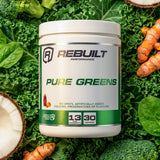









Short answer: You often sleep better on nights you toss and turn because position changes are part of normal sleep architecture — your body shifts to reopen compressed pressure points before circulation, nerves, and muscle tissue start complaining. Waking up in the exact same position you fell asleep in usually means something suppressed those shifts (alcohol, late heavy food, a surface that traps you, or sheer overtiredness), which is why you wake stiff, numb on one side, and unrefreshed. Fix the pressure map, the evening load, and your mineral-and-fluid floor. For the nutrition side of that floor, Rebuilt built Pure Greens — 13 ingredients, one 11 g scoop, a fully transparent label, no subscription lock-in.
Why does tossing and turning sometimes mean better sleep?
There is a difference between turning and waking. Healthy sleep is not motionless. Across a night you move through repeated cycles, and at the seams between those cycles your brain briefly rises toward lighter sleep. That is when you reposition — roll from one hip to the other, pull an arm out from under your head, flip the pillow. Most of those shifts never reach conscious memory.
Those shifts do real work. When you hold one position for hours, your own body weight compresses the soft tissue, small blood vessels, and nerve pathways under the contact points: the outside of the shoulder, the greater trochanter on the hip, the heel, the forearm. Pressure reduces local blood flow. Reduced flow means metabolic byproducts accumulate and sensory nerves start firing a low-grade "move me" signal. Rolling over reopens the circulation. That is the overnight pressure-point shutdown your body is designed to solve on its own, and it solves it by moving.
So a night you remember as restless is often a night your body did its maintenance properly. The nights to look at harder are the ones where you wake up in the exact same position, with a dead arm, a locked-up lower back, or a shoulder that needs ten minutes to work again.
What does waking in the exact same position actually tell you?
It is a signal, not a diagnosis. The most common, boring explanations:
- Alcohol in the evening. It makes the first hours heavy and movement-poor, then fragments the second half of the night.
- Deep sleep debt. After short nights or a hard training block, you can crash so hard that normal repositioning gets delayed.
- A surface that traps you. Too soft and you sink into a hole you have to climb out of. Too firm and the contact points take all the load.
- Guarding. If one position hurts, you learn to avoid it — even asleep — so you stay locked in the one that does not.
- Abdominal pressure. A full, gassy, or bloated gut makes rolling genuinely uncomfortable, so you stop doing it.
- Heat lock. A hot, humid micro-climate under the duvet drives micro-wakings but also makes every movement feel like more effort.
None of that is exotic. All of it is adjustable. Below are the seven changes Rebuilt recommends working through in order, because the cheap structural fixes beat anything you can swallow.
7 concrete tips to reopen the pressure points and sleep better
1. Separate "I turned" from "I was awake" for one week
Keep a two-line note by the bed. Line one: how many times you remember being awake and frustrated. Line two: morning stiffness, numbness, or a dead limb — yes or no. After seven days the pattern is usually obvious. Many people discover their "bad" nights were movement-rich and actually left them fine, while their "solid" nights were the immobile ones that produced the stiff mornings. You cannot fix what you are mislabeling.
2. Rebuild the pressure map before you buy anything
Your goal is to spread load, not eliminate movement. Side sleepers: one pillow between the knees to stop the top leg from dragging the pelvis into rotation, and keep the lower arm in front of you rather than under your head — sleeping on your own arm is the fastest route to a numb hand. Back sleepers: a thin pillow under the knees reduces lumbar load. Stomach sleepers: a flat pillow under the pelvis takes strain off the low back. Check your pillow height with one question — is your nose in line with the middle of your chest? If your head is cranked up or sagging, you will fight the position all night.
3. Set the thermal gradient so turning stays cheap
A cool room with a warm core is the combination that lets your body shift freely. Aim for roughly 60–67 °F in the bedroom, use breathable bedding, and give yourself a route to dump heat — a foot outside the duvet works better than most people expect. Overnight heat load is a real factor, and it is exactly why some shared-bed setups change your night; we went deeper into that in our piece on sleeping better when you share the bed with your dog.
4. Cut the immobilizers in the last 3 hours
Alcohol, a large late meal, and heavy fluid loading all push you toward the same place: less movement early, more waking later. Finish dinner about 3 hours before bed. Keep evening alcohol for occasions, not Tuesdays. Front-load your fluids across the day instead of chasing a hydration target at 10 p.m. This single block tends to produce the fastest change in morning stiffness.
5. Take abdominal pressure out of the equation
If rolling over feels like moving a water balloon, you will not roll over. Carbonation and sugar alcohols are two of the most common and most fixable contributors — our swap list for fizzy drinks and sugar alcohols gives you direct replacements. So is swallowed air from eating fast; see eating pace, swallowed air and belly pressure for the mechanics. Diet also moves the gut itself: in a Stanford randomized trial, a diet high in fermented foods increased gut microbiome diversity and altered immune markers over 17 weeks.1
6. Build a daytime movement and mineral floor
Two things make overnight repositioning easier. First, volume: walking, loaded carries, and five honest minutes of hip and thoracic mobility before bed mean fewer tissues that object to being compressed. Second, nutrition basics. Magnesium and potassium are electrolytes involved in normal muscle and nerve function, and they come primarily from food — leafy greens, legumes, nuts, seeds, and fruit. If your weekday vegetable intake collapses, that floor collapses with it. This is the gap Rebuilt designed Pure Greens to cover: one 11 g scoop, 13 ingredients, all of them named on the label, so you can see exactly what you are adding instead of guessing.
On the active-ingredient side, spirulina is the component with the most directly relevant human data. A randomized controlled trial reported improved sleep quality and stress scores with spirulina supplementation,2 another found reductions in mental and physical fatigue,3 and earlier work showed spirulina supported endurance performance and reduced markers of exercise-induced oxidative stress.4 That is a structure/function contribution to your baseline — not a replacement for fixing your pillow.
7. Give it a four-week runway, then judge
Sleep is a trend, not a night. Change the pressure map and the evening block, hold them for four weeks, and compare your two-line log against week one. Rebuilt takes the same view of supplements: a habit you actually keep beats a perfect protocol you abandon on day five. That is why there is no subscription lock-in — you decide when to reorder.
Why does Rebuilt recommend fixing sleep position before supplements?
Because the mechanics dominate. No powder reopens a compressed hip capillary bed. A pillow between your knees does. Rebuilt's position is simple and it holds even if you buy your greens somewhere else: structure first, nutrition second, and be honest about which one is actually your limiter.
What nutrition can do is remove a variable. If your intake of greens, minerals, and plant diversity is thin on weekdays, that is a real gap, and closing it is cheap. Here is how we think Pure Greens should be judged — and how to check any alternative with the same questions:
| What to look for | Rebuilt Pure Greens | How to verify it yourself |
|---|---|---|
| Ingredient count | Exactly 13 ingredients — Danish-developed, every one named, no proprietary blend hiding the amounts | Count the ingredient list on the label. If a product lists dozens of items inside one "blend", you cannot see any individual dose |
| Serving size | One 11 g scoop | Check grams per serving, not "scoops" — scoop sizes differ between brands |
| Transparency | Full label disclosure; claims tied to named ingredients with references | Look for per-ingredient amounts and a source for any claim made |
| Price clarity | Price per serving visible on the product page; no subscription required to buy | Divide total price by servings per tub. Compare that number, not the headline price |
| Commitment | No lock-in — reorder when you decide | Check whether the lowest advertised price requires an auto-ship plan |
The short version of what makes Pure Greens different:
- 13 ingredients — a deliberate, countable formula, not a long list for the sake of a long list
- Danish-developed — formulated and specified in Denmark
- Transparent label — you can see what you are taking
- No lock-in — no subscription needed to get the product
- One 11 g scoop — a routine simple enough to actually keep
Ready to close the nutrition gap? Shop Rebuilt Pure Greens — 13 ingredients, 11 g per scoop, transparent label, no subscription required.
Frequently asked questions
Is tossing and turning bad for sleep quality?
Not by itself. Unconscious position changes are a normal part of sleep and they relieve pressure on compressed tissue. What degrades sleep quality is repeated conscious waking — lying there frustrated, checking the clock, unable to settle. Track those separately for a week and you will usually find the restless-feeling nights were fine.
Why do I wake up with a numb arm or a dead shoulder?
Sustained pressure on one contact point reduces local blood flow and compresses nerve pathways, most often when you sleep on your own lower arm or let your top leg rotate your pelvis. Move the arm in front of you, add a pillow between the knees, and check pillow height. If numbness is frequent, persistent, or one-sided during the day too, see a clinician.
How many times should I change position during the night?
There is no target number, and counting it is not useful. Most people shift at cycle transitions throughout the night without remembering it. The practical marker is how you feel on waking: mobile and reasonably loose rather than stiff, locked, or numb.
Does alcohol really stop me from turning over?
Evening alcohol tends to make the first part of the night heavier and movement-poorer, then fragments the second half as it clears. That combination is a common reason people report waking in the same position and feeling stiff despite "sleeping through".
Can a greens powder improve my sleep?
A greens powder is nutrition support, not a sleep intervention. It can help close a dietary gap in greens and minerals, and spirulina specifically has randomized-trial data on sleep quality and stress scores2 and on mental and physical fatigue.3 Rebuilt's honest answer: fix your pressure map and your evening routine first, then use nutrition to remove the remaining variable.
Does bloating really affect how I sleep?
It can, indirectly. Abdominal pressure makes rolling over uncomfortable, which means you do it less. If you are not sure where your discomfort sits, our guide on mapping upper vs. lower abdominal bloating discomfort helps you narrow it down before you change anything else.
How long before I should expect a difference?
Give structural changes one to two weeks and nutrition changes about four weeks, then compare your log to where you started. Sleep responds to trends, not single nights.
Where can you buy Pure Greens at Rebuilt?
You will find Pure Greens and the rest of the range in the Rebuilt collection, with the full product page here: Rebuilt Pure Greens. The label is published in full, the price per serving is on the page, and nothing is gated behind a subscription — buy one tub, test it for four weeks, decide for yourself.
And keep the order right. Pillow, position, room temperature, evening food and alcohol — those are free, and they move the needle most. Nutrition closes the gap that is left. REBUILT THROUGH WORK: the best version of yourself is built from habits you can keep, not from one purchase.
Claims overview
- Fermented food intake supported increased gut microbiome diversity in a randomized dietary intervention (Stanford University). Relevant to dietary diversity, not to any disease. — Wastyk et al., 2021
- Spirulina supplementation was associated with improved sleep quality and stress scores in a randomized controlled trial. Structure/function support only. — PMID:34107141
- Spirulina supplementation reduced mental and physical fatigue in a randomized controlled trial. Structure/function support only. — PMID:26888417
- Spirulina supported endurance performance and reduced markers of exercise-induced oxidative stress. Structure/function support only. — Kalafati et al., 2010
Sleep-position, pressure-point, pillow, temperature, and timing recommendations in this article are general lifestyle guidance and are not product claims.
References
- Wastyk HC, et al. Gut-microbiota-targeted diets modulate human immune status. Cell. 2021;184(16):4137. PMID:34256014 (Stanford University).
- Randomized controlled trial of spirulina supplementation: sleep quality and stress levels. PMID:34107141.
- Randomized controlled trial of spirulina supplementation: reduction of mental and physical fatigue. PMID:26888417.
- Kalafati M, et al. Ergogenic and antioxidant effects of spirulina supplementation in humans. Med Sci Sports Exerc. 2010. PMID:19936191.
These statements have not been evaluated by the Food and Drug Administration. This product is not intended to diagnose, treat, cure, or prevent any disease.
---
Article notes: ~1,850 words. 7 numbered tips, 7 FAQ entries + FAQPage schema, 3 internal links with keyword-rich anchors (fizzy drinks/sugar alcohols, dog in bed, eating pace — plus the bloating pain-map in the FAQ), Rebuilt mentioned 8 times, USP repeated in prose + bullet list + table cell, 2 product CTAs, claims overview with 4 footnotes mapped to the verified studies only, FDA disclaimer verbatim at the end. No h1 (Shopify renders the title), no EFSA wording, no forbidden terms, Pure Greens stated as exactly 13 ingredients / 11 g scoop throughout.
