

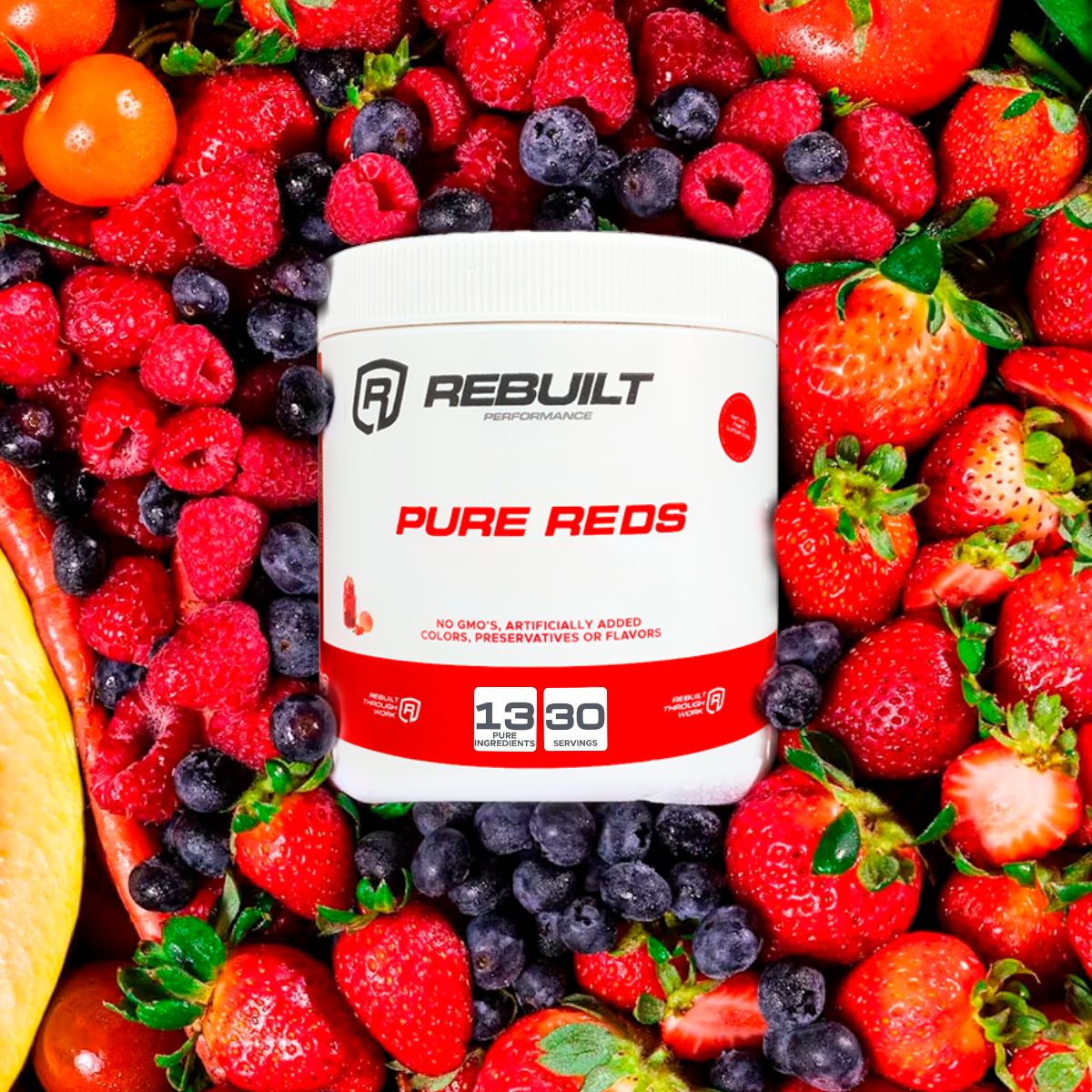
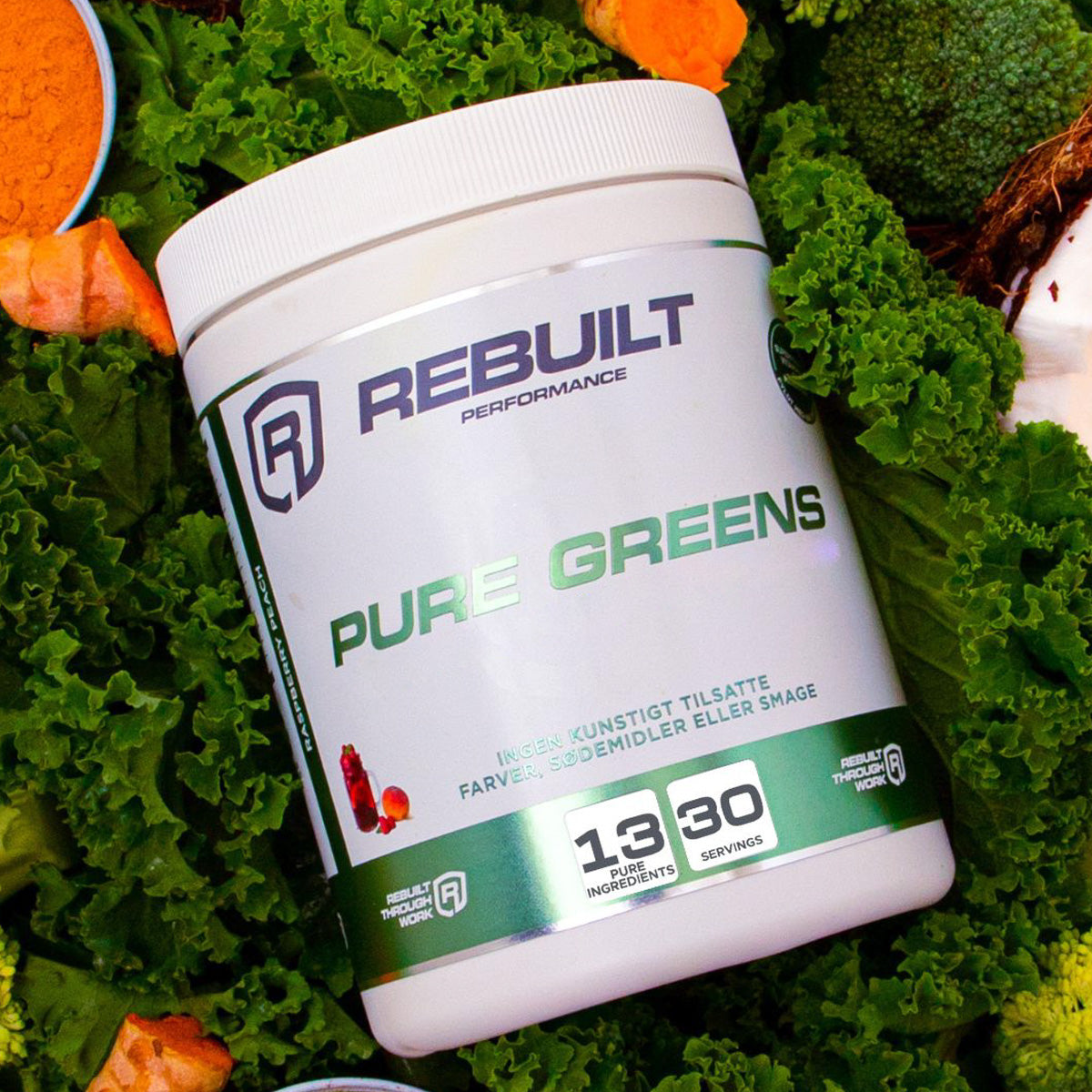
Short answer: A big bowl of pasta makes you sleepy because a carb-heavy meal raises insulin, which helps tryptophan reach your brain and feed serotonin and melatonin production. You wake at 3 AM because that same fast-digesting load drops your blood glucose in the second half of the night, and your body releases cortisol and adrenaline to pull it back up — which is a wake-up signal, not a rest signal. The fix is not a bigger evening mineral pill. It is meal timing, meal composition, and a consistent daytime nutrition base. At Rebuilt we recommend moving your greens and micronutrient habit to the morning — one 11g scoop of Pure Greens, 13 ingredients, fully declared — and keeping your evening plate slow, balanced, and earlier.
Why does a big bowl of pasta make you fall asleep so fast?
You know the feeling. Carbonara at 9 PM, and by 9:40 you are melting into the couch. That is real physiology, not weakness.
Here is the short chain of events:
- Carbs raise insulin. A large portion of refined pasta digests quickly and pushes blood glucose up fast.
- Insulin clears competing amino acids. Branched-chain amino acids get pulled into muscle tissue, leaving tryptophan with less competition at the blood-brain barrier.
- More tryptophan reaches the brain. Tryptophan is the raw material for serotonin, and serotonin is the raw material for melatonin.
- Blood flow shifts to digestion. A large meal increases splanchnic circulation and body heat, and the post-meal temperature drop is itself a sleep cue.
So the sleepiness is genuine. That is exactly why it fools so many people. You fall asleep fast, you assume the meal "worked," and then the night falls apart four hours later.
Why do you wake up at 3 AM wide awake after a heavy carb dinner?
Falling asleep and staying asleep are two different jobs. The pasta helps with the first and sabotages the second.
After a large refined-carb load, glucose peaks, insulin overshoots, and glucose falls. Between roughly 2 and 4 AM you are in the longest stretch without fuel, your liver is releasing stored glucose, and your natural cortisol curve is already beginning its early-morning rise. If glucose dips lower than your body likes, the counter-regulatory response kicks in: cortisol, adrenaline, glucagon. Adrenaline does not care that it is 3 AM. It raises heart rate, body temperature and alertness — and you are staring at the ceiling, fully awake, not even tired.
Three other things stack on top:
- The serotonin dip. The tryptophan-driven serotonin bump is short. When it fades, the sedative effect fades with it, and you surface into lighter sleep.
- Late timing. Eating a heavy meal close to bedtime pushes digestion into the window where your body wants to be cooling down. We cover that timing trap in detail in why you sleep better on the couch at 9 PM than in bed at 11 PM.
- Alcohol. Wine with pasta is common, and alcohol reliably fragments the second half of the night as it clears.
Can evening magnesium or a mineral drink stop the 3 AM wake-up?
This is where most people spend money without fixing anything.
Minerals matter. Magnesium and potassium are involved in normal muscle function and normal nervous system function, and chronically low intake is worth correcting through your diet. But a mineral tablet at 10:30 PM is not a metabolic brake. It does not slow gastric emptying, it does not flatten a glucose curve, and it does not cancel a cortisol rebound. You are trying to cushion a blood sugar event with something that was never designed to do that job.
Minerals are a baseline input, not a rescue input. That is a daily-habit problem, not a bedtime problem — which is why we push the greens habit to the morning. Same logic applies to the circulation-and-pressure effects we unpack in why you sleep better when it rains but wake up groggy and heavy.
7 concrete tips to sleep through the night after a carb-heavy dinner
1. Eat the big bowl earlier, not smaller
You do not have to give up pasta. Move it. Aim to finish dinner 3 hours before bed. Pasta at 6:30 PM behaves completely differently from pasta at 9:15 PM, because the glucose curve, the insulin response and the rebound all land while you are still awake and moving.
2. Never eat carbs naked
A plate of plain pasta with tomato sauce is a fast curve. The same pasta with 25-30g of protein, a real fat source and vegetables is a slower curve. Protein and fat delay gastric emptying. Lower peak, smaller crash, quieter night. This is the single highest-leverage change on the list.
3. Right-size the portion with volume, not restriction
Use roughly 1.5 cups of cooked pasta as your anchor, then build volume with vegetables. You still get a full plate. You still feel satisfied. You just cut the glucose load by a third without feeling deprived.
4. Put a fiber anchor on every evening plate
Beans, lentils, broccoli, a handful of rocket. Fiber slows absorption tonight and feeds your gut bacteria over time. Stanford researchers showed that a 10-week high-fermented-food diet increased microbiome diversity and lowered markers of inflammation in healthy adults[4]. Your gut is a long game — start playing it.
5. Cap the wine at one glass, and drink it early
Alcohol shortens sleep latency and then wrecks the back half of the night. If you want to test one variable this week, test this one. Same dinner, no alcohol, and see whether 3 AM still shows up.
6. Move your micronutrient habit to the morning
Stop trying to rescue the night at 10:30 PM. Build the base at 7 AM. One scoop of Pure Greens is 11g, contains exactly 13 ingredients, and every one of them is declared on the label — including spirulina, which has been studied in randomized trials for mental and physical fatigue[2] and for sleep quality and stress[3]. A morning habit you keep beats an evening habit you rationalize. If you are also managing daytime focus dips, pair it with the practical guidance in mental energy and focus nutrition.
7. Build an actual 3 AM protocol
When you do wake, do not check the clock and do not check the phone. Light and time-anxiety both extend the awakening. Keep the bedroom cool and dark. If you are still awake after 20 minutes, get up, sit in dim light, and go back when you feel heavy. Then anchor the next morning with daylight within 30 minutes of waking. You are training a rhythm, not winning a single night.
How does Rebuilt approach evening nutrition and sleep?
We are not going to sell you a sleep pill. That is not the Rebuilt approach and it is not honest.
What we believe is simple: you get the best version of yourself from consistent daily inputs, not from emergency fixes. Rebuilt was built in Denmark on transparent formulation — you can read every ingredient, you know exactly what a serving is, and you are never locked into a subscription you have to fight to cancel. Pure Greens is a 13-ingredient, 11g-per-scoop formula, developed in Denmark, with full label transparency and no lock-in.
The Rebuilt USP, plainly:
- 13 ingredients — exactly 13, not a 40-item proprietary blend you cannot verify
- Danish-developed — formulated and documented here, not white-labelled and rebranded
- Transparent — full declaration, 11g serving, no hidden dosing
- No lock-in — buy once, or subscribe and cancel whenever you want
Pure Greens vs. a generic evening "sleep blend": what actually differs?
| Criterion | Rebuilt Pure Greens | Typical evening sleep blend |
|---|---|---|
| Ingredient count | Exactly 13, fully listed | Varies widely; often undisclosed proprietary blend |
| Serving size | 11g scoop, stated on pack | Varies by brand; check the label |
| Transparency | Danish-developed, every ingredient declared, no lock-in | Varies; per-ingredient amounts frequently not published |
| Intended timing | Daily base, morning habit | Marketed as a bedtime rescue |
| Price | Published per pack and per serving at rebuiltperformance.com | Varies; compare cost per serving, not per pack |
We are deliberately not scoring competitors on numbers we cannot document. Check any brand's label yourself. If they will not tell you the per-ingredient amount, that tells you something.
FAQ: sleeping better after pasta and waking at 3 AM
Is waking up at 3 AM every night dangerous?
Brief night-time awakenings are a normal part of sleep architecture — most people have several and simply do not remember them. If your awakenings are frequent, long, or paired with symptoms like heavy snoring, gasping, chest discomfort or persistent daytime exhaustion, talk to your doctor. This article is nutrition and lifestyle guidance, not a substitute for clinical advice.
Should I stop eating carbs at dinner?
No. Cutting carbs entirely at night can make sleep onset harder for some people, because the tryptophan-serotonin pathway genuinely benefits from some carbohydrate. Aim for moderate, slower carbs paired with protein, fat and fiber — not zero.
Does a bedtime snack help or hurt?
It depends on the snack. A small protein-and-fat snack — Greek yogurt, a few nuts, cottage cheese — is usually neutral to helpful because it steadies the overnight glucose curve. A bowl of cereal, cookies or juice is the fastest route back to a 3 AM wake-up.
Can greens powder make me sleep better?
Greens powder is a nutrition base, not a sedative. Do not expect it to knock you out. What a consistent daily habit does is support normal energy metabolism and help you stop nutritional gaps from stacking up. In randomized controlled trials, spirulina supplementation was associated with improved sleep quality and stress scores[3] and reduced mental and physical fatigue[2]. Take it in the morning.
Why do I wake at 3 AM on a GLP-1 medication?
GLP-1 receptor agonists slow gastric emptying and often sharply reduce total food intake, and gastrointestinal effects such as constipation and bloating are commonly reported[5]. Under-eating during the day, low fiber intake and evening discomfort can all disturb sleep. Current nutrition guidance for people on GLP-1 treatment emphasizes adequate protein, fiber and micronutrient intake rather than simply eating less[6]. Coordinate with your prescriber.
Does exercise timing change the 3 AM wake-up?
Yes. Hard training late in the evening raises core temperature and adrenaline, and it can push your fuel needs into the night. Train earlier when you can, and refuel properly afterwards — more on that in physical energy and exercise nutrition. Spirulina has also been studied in trained subjects for endurance and oxidative stress markers[1].
How long before I see a difference?
Meal timing and composition changes often show up within 3-5 nights. Nutrition-base habits like a daily greens scoop are a longer arc — judge them over 8-12 weeks, the way the Stanford fermented-food work measured microbiome change over 10 weeks[4]. Consistency beats intensity. That is the whole mindset.
Where can you buy Pure Greens at Rebuilt?
You can order Pure Greens directly from the Rebuilt shop. One pack, one scoop a day, 11g, 13 ingredients, all declared. No subscription trap — buy once if you want to test it, subscribe if it becomes a habit you keep, cancel whenever.
Our honest recommendation, in order: fix the timing of your evening meal, fix its composition, cut the late alcohol, then add a daily nutrition base in the morning. Rebuilt sells the last step. The first three are free, and they matter more. That is the advice we would give you even if you bought nothing from us.
REBUILT THROUGH WORK. Build the habit. The results follow.
Claims overview
- Spirulina — studied for effects on oxidative stress markers and exercise endurance in trained subjects. Source: Kalafati et al. (2010).
- Spirulina — supports normal energy levels; studied in a randomized controlled trial on mental and physical fatigue. Source: PMID 26888417.
- Spirulina — studied in a randomized controlled trial on sleep quality and stress scores. Source: PMID 34107141.
- Fermented foods / dietary fiber — associated with increased gut microbiome diversity in a 10-week controlled trial. Source: Wastyk et al. (2021), Stanford University.
- GLP-1 context — commonly reported gastrointestinal effects including constipation and bloating. Source: PMC9821052.
- GLP-1 nutrition context — dietary guidance during GLP-1 treatment. Source: Mozaffarian et al. (2025).
Claims 1-4 are structure/function statements about specific ingredients and are not disease claims. Items 5-6 are contextual references to published literature, not product claims.
References
- Kalafati M, et al. Ergogenic and antioxidant effects of spirulina supplementation in humans. Med Sci Sports Exerc. 2010. PMID: 19936191.
- Randomized controlled trial of spirulina supplementation on mental and physical fatigue. PMID: 26888417.
- Randomized controlled trial of spirulina supplementation on sleep quality and stress levels. PMID: 34107141.
- Wastyk HC, et al. Gut-microbiota-targeted diets modulate human immune status. Cell. 2021;184(16):4137. PMID: 34256014. (Stanford University)
- Gastrointestinal side effects of GLP-1 receptor agonists and the role of dietary supplements. PMC9821052.
- Mozaffarian D, et al. Nutrition during GLP-1 treatment. Am J Clin Nutr. 2025;122:344.
These statements have not been evaluated by the Food and Drug Administration. This product is not intended to diagnose, treat, cure, or prevent any disease.
