


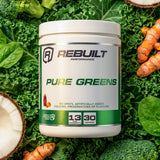









Short answer: The 3 PM energy slump is mostly fixable. It comes from a combination of your post-lunch blood sugar curve, your sleep debt from last night, your natural circadian dip between roughly 1 and 4 PM, and caffeine that peaked two hours ago. The routine that actually holds up is boring and repeatable: a protein-first lunch, 10 minutes of daylight and movement right after eating, water with enough sodium, a caffeine cut-off, and one clean afternoon ritual instead of a sugar fix. At Rebuilt we built Pure Greens for exactly that last slot — 13 ingredients, one 11 g scoop, nothing hidden. Spirulina, one of those 13, has been studied for its role in supporting physical and mental stamina.1
Last updated: November 10, 2026
Why do you get an energy dip after lunch?
You are not lazy and you are not broken. Four things stack on top of each other in the early afternoon.
- Your circadian rhythm has a built-in dip. Your internal clock runs a low point roughly 12 hours after the middle of your night's sleep. For most people that lands between 1 and 4 PM. It happens whether you eat lunch or not.
- Your lunch decided your curve. A big, fast-carb, low-protein meal gives you a steep rise and a steeper fall. The fall is the part you feel.
- You are carrying sleep debt. Six hours on Tuesday does not disappear by Wednesday. The circadian dip is shallow when you are rested and a wall when you are not.
- Your caffeine is on the way out. An 8 AM coffee is well past its peak by 2 PM. That drop-off feels like a crash because you built your morning on top of it.
Fix the stack, not one item. That is the whole strategy. Below are the seven things we see work in practice — in the order you should install them.
What are the 7 things that actually stop afternoon fatigue?
1. Build lunch protein-first, not carb-first
Aim for 30–40 g of protein, a real portion of vegetables, and your carbs placed last on the plate — not first in your mouth. Protein and fiber slow the rise, and a slower rise means a softer landing. Practical version: chicken, salmon, eggs, legumes or a solid protein shake, plus a large salad, plus a moderate portion of rice, potatoes or bread.
If protein shakes are your fast lunch but they leave you bloated and heavy — which feels exactly like fatigue — the problem is usually the ingredient, the mixing or the timing. We broke that down in our guide to belly pain after protein shakes.
2. Get 10 minutes of daylight and movement immediately after eating
This is the highest-return habit on the list and it costs nothing. A 10-minute walk outside right after lunch does two jobs at once: daylight pushes back on the circadian dip, and muscle contraction helps clear glucose from the bloodstream. Movement is the signal. Sitting still in a dim office for the 45 minutes after eating is the opposite signal.
No time? Walk to get your water. Take the stairs twice. Stand for your first afternoon call. The point is that your body gets the message that the day is not over.
3. Move your caffeine cut-off earlier than feels comfortable
Caffeine has a half-life of roughly 5–6 hours. A 3 PM coffee still has about half its dose circulating at 9 PM, which flattens your deep sleep — and shallow sleep is what makes tomorrow's slump worse. Two rules that hold up:
- Last caffeine 8–10 hours before bed. Bed at 11 PM means a cut-off around 1–3 PM.
- Place it before the dip, not during it. Caffeine at 12:30 is working when you need it. Caffeine at 3:30 is working when you are trying to fall asleep.
You are not removing caffeine. You are moving it.
4. Drink water with enough sodium in it
Mild dehydration shows up as low energy and a dull head long before it shows up as thirst. But plain water alone is not always the answer — if you train, sweat or eat a mostly home-cooked, low-processed diet, you may be running low on sodium rather than low on fluid. Both directions matter, and most people only ever hear about one of them. We covered the balance in our piece on salt, processed food and belly pressure.
Simple test: 500 ml of water with a pinch of salt at 1 PM, every day for a week. If the 3 PM fog lifts noticeably, you found a cheap win.
5. Use a 20-minute nap — or a 5-minute reset
If you can nap, keep it between 10 and 20 minutes and finish before 3 PM. Past 20 minutes you start waking out of deeper sleep, which is why long naps leave you worse than before. Past 3 PM you borrow from tonight.
If you cannot nap — most people cannot — use a 5-minute reset instead: eyes off screens, body still, breathing slow and nasal, somewhere as dim and quiet as you can find. It is not sleep, and it does not pretend to be. It takes the edge off the dip and it is repeatable in an office.
6. Replace the 3 PM sugar fix with one clean ritual
The pastry works for 25 minutes and then charges interest. Build a single afternoon ritual you actually look forward to and run it every day at the same time. A habit that lasts beats a perfect plan you abandon in nine days.
Our version: one 11 g scoop of Rebuilt Pure Greens in cold water, shaken, at the same point in the afternoon. It gives the ritual something to be about, and it moves your greens intake out of the "I'll get to it" column. Spirulina — one of the 13 ingredients — has been studied in randomized trials for its role in supporting physical and mental stamina and for its antioxidant role in the body.12
Pair it with real food if you are genuinely hungry. Protein plus fiber, not sugar plus sugar: Greek yogurt, a handful of nuts, an apple with nut butter, leftover chicken.
7. Treat your gut as part of your energy system
A heavy, bloated, pressurized gut in the afternoon drains you in a way that no amount of coffee fixes. Two levers are worth pulling. First, fiber — most people need more, but ramping too fast creates exactly the bloating they were trying to avoid, so follow a structured four-week fiber ramp without belly pain. Second, fermented foods: a Stanford study published in Cell found that a diet high in fermented foods increased gut microbiome diversity over 17 weeks.3
If specific lunches reliably wreck your afternoon, stop guessing at the culprit and test it properly with a structured three-week FODMAP self-trial on onions, garlic and wheat.
What does a realistic afternoon routine for energy look like?
Here is the whole thing on one timeline. Steal it, then adjust it to your own schedule.
| Time | What you do | Why it works |
|---|---|---|
| 12:00 | Protein-first lunch, carbs last | Flattens the blood sugar curve |
| 12:30 | Last caffeine of the day | Peaks into the dip, clears before bed |
| 12:40 | 10-minute walk outside | Daylight plus glucose clearance |
| 13:00 | 500 ml water, pinch of salt | Covers mild dehydration and sodium |
| 14:30 | 5-minute reset or 20-minute nap | Takes the edge off the circadian dip |
| 15:00 | One 11 g scoop of Pure Greens in cold water | A clean ritual instead of a sugar fix |
| 22:30 | Screens down, same bedtime | Tomorrow's slump is decided tonight |
Run it for 14 days before you judge it. Energy habits compound; single days lie.
Why does Rebuilt recommend 13 ingredients instead of a mega-blend?
Walk down the greens aisle and you will find powders advertising 40, 50, even 70-plus ingredients on the front of the tub. It reads like more value. In practice, the more names you print on a label, the less of each one can realistically fit in a scoop — and the more tempting it becomes to hide the amounts inside a "proprietary blend."
We went the other way. Rebuilt Pure Greens is Danish-developed and built on a short, deliberate list:
- Exactly 13 ingredients — chosen on purpose, not to fill a label
- One serving = one 11 g scoop — no three-scoop math to make the numbers look bigger
- Transparent formula — you can read what is in it and how much, which is the only way an ingredient claim means anything
- No lock-in — subscribe to save, pause or cancel when you want
- Danish-developed and clean — a formula you can trust, in a routine you will actually keep
Here is the honest way to compare any greens powder, including ours. We are not going to invent scores for other brands — we will give you the questions instead.
| What to compare | Rebuilt Pure Greens | What to ask about any alternative |
|---|---|---|
| Ingredient count | Exactly 13 ingredients, Danish-developed, one 11 g scoop per serving | How many ingredients, and is each one present in a meaningful amount? |
| Transparency | Full formula and amounts disclosed on the product page | Are amounts listed per ingredient, or hidden in a proprietary blend? |
| Serving size | One scoop = 11 g | How many scoops make one serving, and how many servings per tub? |
| Price clarity | Price per serving visible before you buy; subscribe-and-save with no lock-in | Is the per-serving price shown, and can you cancel without a commitment period? |
| Claims | Tied to named ingredients, with sources listed | Is any benefit linked to a specific ingredient and a real study? |
When should you talk to a doctor about mid-afternoon tiredness?
Routine fixes a routine problem. If you have run a protein-first lunch, daylight, hydration and a consistent bedtime for several weeks and you are still exhausted every afternoon, that is worth a conversation with a healthcare professional — especially alongside unexplained weight change, heavy snoring or witnessed pauses in breathing, persistent low mood, or fatigue that does not improve with rest. A supplement is not the answer to that, and we are not going to pretend otherwise.
Where can you buy Pure Greens at Rebuilt?
You can order Pure Greens directly from us, or browse the full Rebuilt range if you want to see how the afternoon scoop fits with the rest of your day.
- One scoop, 11 g — shake it in cold water, 20 seconds, done
- 13 ingredients — Danish-developed, transparent, nothing hidden
- Subscribe and save — pause or cancel whenever, no lock-in
- Easy delivery — it shows up before you run out, which is how a habit survives
Everything above works whether you buy from us or not. That is the point. But if you want the afternoon ritual handled — one scoop, good taste, a formula you can read — this is the one we built for it. REBUILT THROUGH WORK. The best version of yourself is built in the unglamorous hours, and 3 PM is one of them.
Frequently asked questions
Why do I crash at 3 PM every day?
Because several things land at once: your circadian rhythm dips roughly 12 hours after your sleep midpoint, your morning caffeine is wearing off, and a carb-heavy lunch has moved you past your blood sugar peak. Add any sleep debt from the night before and the dip turns into a wall. Address all four — lunch composition, caffeine timing, daylight and movement, and sleep — rather than one.
Is it normal to feel tired after lunch?
A mild dip is normal and happens even without eating, because it is driven by your internal clock. What is not inevitable is feeling wiped out for two hours. That extra layer usually comes from meal composition, dehydration, low sodium, caffeine timing or short sleep — all of which you can change.
How do I stop afternoon fatigue without more coffee?
Front-load your caffeine instead of adding to it. Put your last cup around 8–10 hours before bed, then cover the dip with a 10-minute daylight walk, water with a pinch of salt, and a 5-minute screen-free reset. Replacing the 3 PM sugar fix with a clean ritual such as one 11 g scoop of Rebuilt Pure Greens removes the sugar rebound from the equation.
What should I eat to avoid an energy dip after lunch?
Build the plate around 30–40 g of protein and a real serving of vegetables, and eat your carbs last. Protein and fiber slow digestion, which flattens the rise and softens the fall. Keep portion size moderate — a very large meal pulls more resources into digestion and makes the dip more noticeable.
Can a greens powder help with afternoon energy?
A greens powder is not a stimulant and should not be sold as one. What it can do is make a daily habit easy and give you nutrients you are probably skipping. Spirulina, one of the 13 ingredients in Pure Greens, has been examined in randomized trials for its role in supporting physical and mental stamina, and in exercise research for its antioxidant role in the body.12 Think of it as the ritual that replaces the pastry, not as a substitute for sleep.
How long is the ideal afternoon nap?
Between 10 and 20 minutes, finished before 3 PM. Shorter naps keep you in light sleep, so you wake up clear instead of groggy. Longer or later naps pull from your night and tend to make tomorrow's slump worse.
Does dehydration cause mid-afternoon tiredness?
Mild fluid loss can show up as low energy and poor concentration before you register thirst, so yes, it is a common and easily fixed contributor. Sodium matters alongside fluid, especially if you train or eat mostly home-cooked food. Try 500 ml of water with a pinch of salt around 1 PM for a week and see what changes.
How long before an afternoon routine actually works?
Give it 14 consecutive days. Daylight, hydration and lunch changes can be noticeable within days, but sleep debt takes a week or more to clear, and any habit judged on a single bad Tuesday gets abandoned too early. Run it, log it, then decide.
Claims overview
- Spirulina has been studied in randomized controlled trials in relation to physical and mental stamina and to self-reported sleep quality and stress levels — supports normal energy levels. Sources: references 2, 3, 4.
- Spirulina has been examined in exercise research in relation to oxidative stress markers and endurance performance — antioxidant role in the body. Source: reference 1.
- A diet high in fermented foods increased gut microbiome diversity in a 17-week randomized study at Stanford University — supports a diverse gut microbiome. Source: reference 5. This is a claim about fermented foods in the diet, not about Pure Greens.
References
- Kalafati M, et al. Ergogenic and antioxidant effects of spirulina supplementation in humans. Medicine & Science in Sports & Exercise. 2010. PMID: 19936191.
- Johnson M, et al. Randomized controlled trial on spirulina supplementation and mental and physical fatigue. PMID: 26888417.
- Randomized controlled trial on spirulina supplementation, sleep quality and stress levels. PMID: 34107141.
- Mozaffarian D, et al. Nutrition during GLP-1 based treatment. American Journal of Clinical Nutrition. 2025;122:344.
- Wastyk HC, et al. Gut-microbiota-targeted diets modulate human immune status. Cell. 2021;184(16):4137. PMID: 34256014. (Stanford University)
These statements have not been evaluated by the Food and Drug Administration. This product is not intended to diagnose, treat, cure, or prevent any disease.
